Below Ground · 8 min
The Role of Fungi in Forest Recovery
Fungal communities respond differently to heat, surviving hosts, moisture and substrate. Their recovery is a below-ground story that surface photos miss.
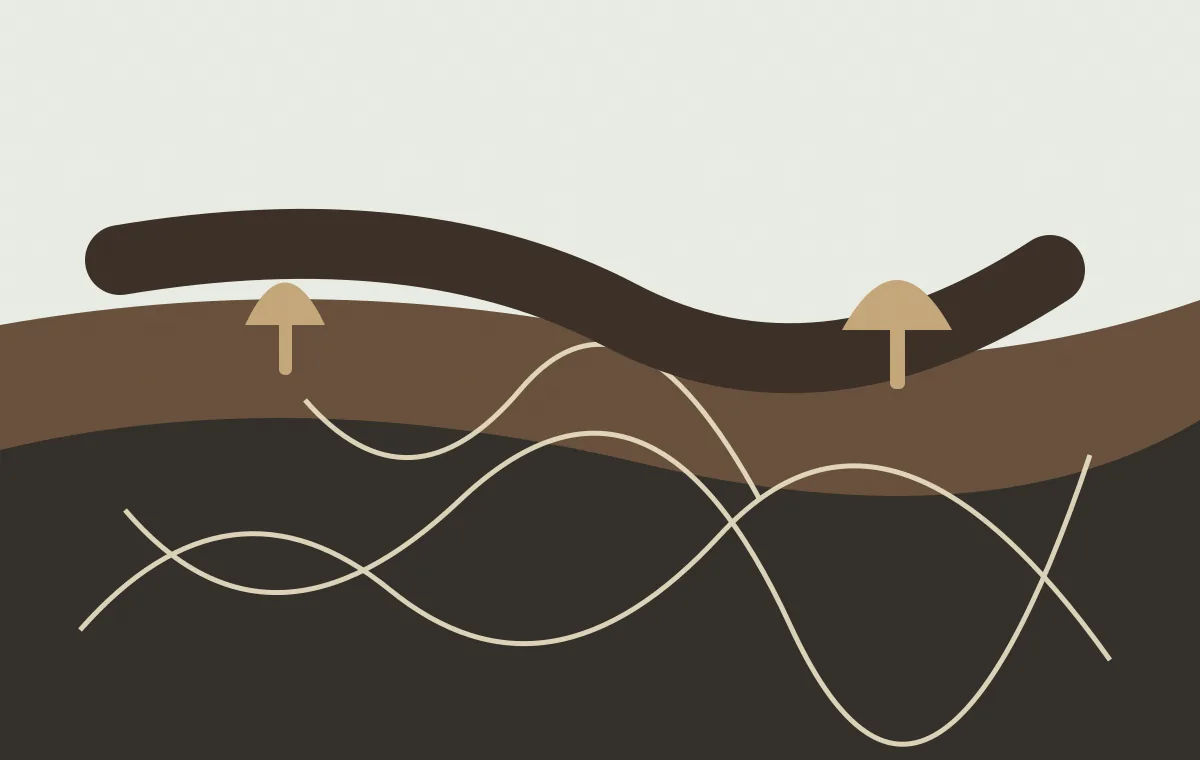
More than mushrooms
The visible fruiting body is only one part of a fungus. Networks of hyphae occur in soil, wood and roots, where different fungi decompose organic material, associate with plants or act as pathogens.
Fire can alter habitat, hosts, moisture and nutrients as well as directly heat organisms. The result is a reassembled community, not a single on-or-off response.
Severity and substrate
Research summarized by the USDA Forest Service shows that burn severity and changing soil conditions can shape microbial communities. Charred wood, surviving roots and new litter provide different substrates through time.
Finding one mushroom species does not establish that below-ground function has returned. Community composition and ecological process require laboratory and field methods.
How to observe responsibly
Photographs can record fruiting bodies, woody substrate and nearby plants. Avoid digging into recovering soil or collecting specimens where rules prohibit it.
For identification or ecological claims, pair images with location, date, habitat notes and qualified review. The article sources are a starting point, not a substitute for a local survey.
Editorial conclusion
Recovery is not one visible moment. The strongest account names the indicator, place, method and timescale, then returns to see what changed. Use the sources at right for the underlying public record.